



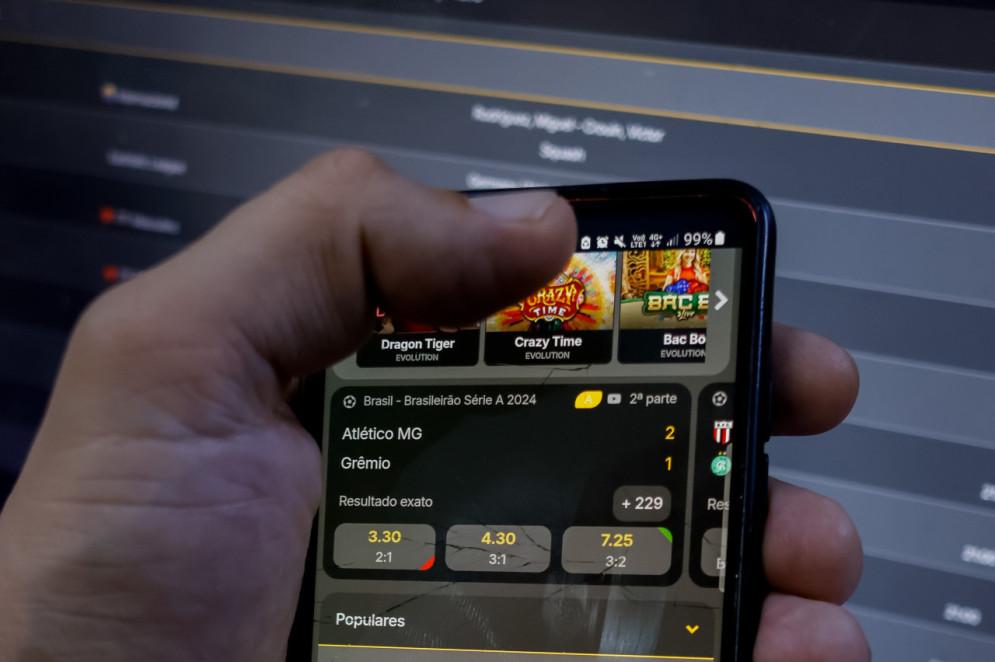
A new NEXT.io report presents two sharply contrasting futures for Brazil’s betting industry, with political stability, regulation and localisation set to determine whether the market fulfils its considerable commercial potential.
Brazil’s regulated online gambling market could grow into a $9 billion industry by 2029, but its trajectory will depend heavily on the political and regulatory decisions taken over the next 12 months.
That is the central conclusion of NEXT iGaming Market in Focus: Brazil, a new report produced by NEXT.io in partnership with Pragmatic Solutions. Drawing on more than 20 interviews with operators, investors, advisers and technology specialists, the research examines both the scale of the opportunity and the challenges facing businesses attempting to establish a lasting position in the country.
Brazil formally opened its regulated online betting market on 1 January 2025. According to the NEXT.io report, the sector generated approximately R$37 billion, equivalent to around $6.5 billion, in gross gaming revenue during its first year, while more than 25 million Brazilians placed a wager. Analysts cited by the report expect the market to approach $9 billion by 2029.
Those figures make Brazil one of the largest newly regulated gambling markets in the world. However, the report argues that rapid early growth alone will not guarantee sustainable returns for operators or investors.
Two possible futures
The report presents a bull case and a bear case for the market.
Under the more optimistic scenario, political pressure surrounding gambling eases after Brazil’s general election on 4 October 2026. Greater regulatory certainty encourages new investment, consumer spending moves closer to levels seen in comparable markets and operator valuations begin to strengthen.
Further legislative development could also expand the market beyond its present structure. The future legalisation of verticals such as bingo and land-based casinos could generate additional gross gaming revenue and bring new forms of investment into Brazil’s leisure economy.
The more cautious scenario is considerably different.
A change in government or policy direction could introduce tighter advertising controls, new deposit levies or wider restrictions on who may participate in regulated betting. Proposed licensing requirements for B2B suppliers could also increase technology costs and place further pressure on operator margins.
Under these conditions, licensed businesses could find it increasingly difficult to compete against offshore platforms that do not carry the same tax, compliance and responsible gambling obligations. The report’s bear case anticipates annual GGR growth falling below 5 per cent while consolidation accelerates.
“Brazil’s opportunity is no longer in question. The central issue is whether regulation allows the licensed market to develop competitively, responsibly and at scale.”
Politics becomes the defining variable
Gambling has become an increasingly visible political issue in Brazil.
The government benefits from tax revenue generated by the newly regulated sector, while religious organisations, consumer groups and sections of the electorate have raised concerns about advertising, household spending and gambling-related harm.
The NEXT.io report concludes that an outright prohibition is unlikely in the immediate future. The greater risk comes from incremental regulatory tightening through secondary legislation, enforcement action and restrictions covering marketing, affiliate relationships and player eligibility.
That direction is already becoming visible. Brazil has moved to strengthen rules governing gambling advertising, including requirements for health warnings and restrictions on messages implying that betting offers an easy route to financial gain.
Such measures are intended to improve consumer protection, but regulators must also consider whether excessive restrictions could unintentionally strengthen the unlicensed market.
A sustainable framework must make regulated operators commercially viable while ensuring that customers receive effective safeguards, transparent terms and access to responsible gambling tools.
Related video: NEXT.io 2026 State of the Industry
Consolidation appears inevitable
Although Brazil attracted a large number of businesses during its opening phase, the report expects the competitive field to become considerably smaller.
Neil Montgomery, founding and managing partner at Montgomery, suggested that the market could be reduced to a maximum of around 50 operators by the end of its fifth year. Some brands are likely to leave voluntarily, while others could become acquisition targets as tax, compliance and customer acquisition costs rise.
This creates an important opportunity for investors.
Mid-sized operators positioned below the market leaders may become more open to strategic partnerships or sales over the next 12 to 24 months. However, scale alone will not determine valuation.
The strongest businesses are likely to be those with clear product differentiation, regional expertise, effective technology and a recognisable relationship with Brazilian customers.
Artificial intelligence may also become an important competitive factor, particularly across personalisation, risk management, customer service and payment optimisation.
For international groups, Brazil may therefore offer both organic growth and acquisition opportunities. The challenge will be distinguishing companies with genuine local strength from those relying predominantly on expensive advertising and short-term promotional activity.
Localisation cannot be superficial
Brazil is not a market in which an international operator can simply translate an existing product into Portuguese and expect it to succeed.
The country has its own sporting culture, consumer behaviours, payment preferences and rapidly developing casino audience. The NEXT.io report describes Brazilian players as younger and particularly open to innovation, with crash games achieving exceptional early popularity.
Local identity matters across every part of the customer journey, from brand language and sponsorships to customer service and payment design.
Operators need Brazilian leadership, local market knowledge and a product capable of reflecting regional differences across a country of continental scale.
Football will remain central to sportsbook activity, but the growth opportunity extends further. Casino products, instant games, live content and mobile-first formats could become increasingly valuable as the customer base matures.
This presents opportunities for game studios and platform providers capable of creating content that feels specifically relevant to Brazilian audiences rather than imported from Europe with minimal adaptation.
Pix sits at the centre of the customer journey
Payment technology is one of the clearest examples of the importance of localisation.
Pix, Brazil’s instant payment system, has become the dominant method for deposits and withdrawals across the regulated market. Its speed and familiarity make it central to the customer experience, while operators must also monitor future regulatory treatment of cards, wallets and alternative payment methods.
Successful operators will need more than the ability to accept Pix. They must offer reliable deposits, rapid withdrawals and strong fraud controls while maintaining compliance with know-your-customer and anti-money-laundering requirements.
Biometric authentication and more intelligent payment orchestration could further reduce friction, particularly on mobile devices.
In a market where customers can move between brands quickly, a failed deposit or delayed withdrawal can damage trust immediately. Payments are therefore not merely an operational function. They are a central component of retention and brand reputation.
Regulation creates a high barrier to entry
Companies operating in Brazil must be incorporated locally and authorised by the Ministry of Finance’s Secretariat of Prizes and Betting.
The framework requires operators to meet legal, technical and financial standards covering areas such as player identification, data handling, anti-money-laundering controls and responsible gambling.
These requirements create a significant cost of entry, particularly for smaller international brands. However, they also favour well-capitalised companies capable of making long-term investments in technology, personnel and compliance.
The NEXT.io report additionally examines the proposed introduction of a dedicated supplier framework. Should B2B licensing become more expensive or administratively complex, those costs are likely to move through the value chain and ultimately affect operators.
Platform providers, payments businesses, affiliates and game suppliers will therefore need to follow Brazilian policy as closely as licensed consumer-facing brands.
Related video: Brazil among the world’s largest betting markets
Growth must be balanced with player protection
Brazil’s rapid gambling expansion has also created growing public concern.
Research and media coverage have highlighted the prevalence of betting among younger mobile users and the potential effect on household finances. During the 2026 World Cup, betting participation reportedly rose sharply, intensifying political and regulatory scrutiny around advertising and gambling-related harm.
These concerns cannot be separated from the market’s commercial development.
Operators that invest seriously in affordability monitoring, self-exclusion, responsible marketing and early intervention may be better positioned to withstand future regulatory change.
Responsible gambling should not be treated as a compliance exercise added after product development. It must be built into onboarding, payment journeys, promotional systems and customer communication.
The brands capable of demonstrating that regulated gambling offers stronger protection than offshore alternatives will have a more convincing case when engaging with regulators and the wider public.
A major market entering its decisive phase
Brazil has already established the scale of its gambling audience. The next phase will determine how much of that demand remains within the regulated system and which companies are capable of converting it into sustainable value.
The $9 billion projection provides an indication of the opportunity, but it should not be mistaken for a guaranteed outcome.
Political stability, competitive taxation and proportionate regulation could encourage investment and allow licensed operators to grow. Conversely, rising costs and increasingly restrictive rules could accelerate consolidation while driving some customers towards unregulated alternatives.
For investors, the market presents rare scale but considerable execution risk. For operators, success will require far more than a licence and a recognisable international brand.
Brazil rewards speed, but it also demands local knowledge, cultural relevance, reliable payments and a willingness to adapt continuously.
The country’s regulated iGaming industry has arrived at remarkable pace. Whether it becomes a $9 billion success story will depend on the choices made as the market moves from its opening surge towards long-term maturity.