



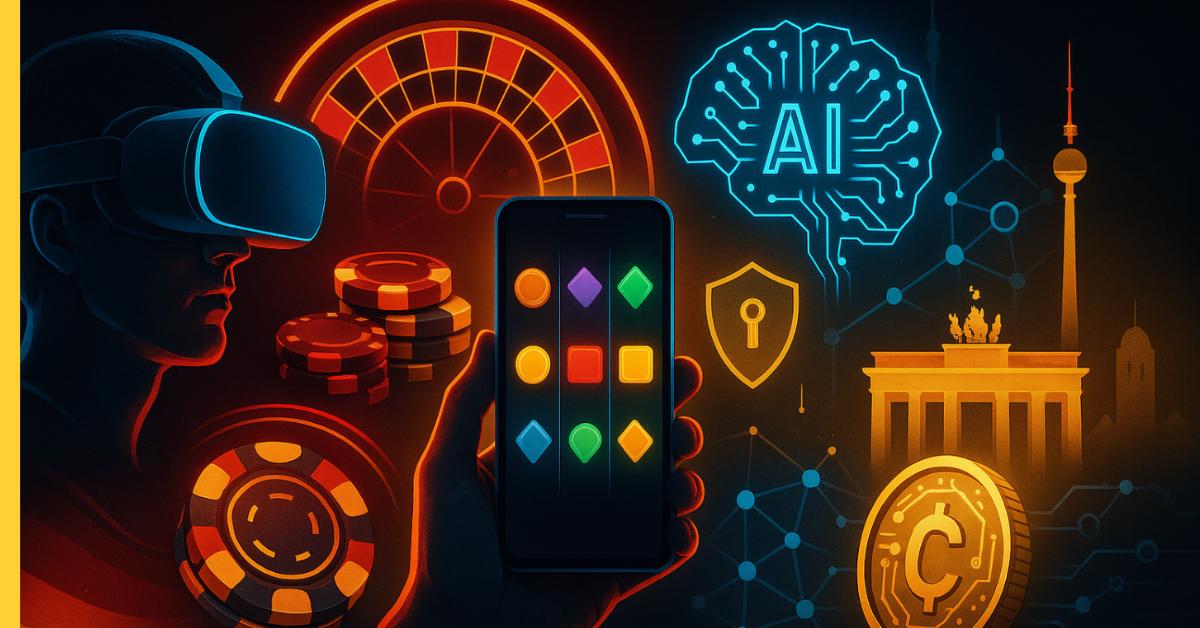
Germany’s never been a place that settles. From high-precision engineering to automotive legends, the culture here’s been about building things well. That ethos is shifting into iGaming—and fast. The players (both brands and gamblers) are raising expectations, and the tech is trying to keep up.
Polish the Basics until They Shine
In Germany right now, innovation often starts with something simple: making what already exists feel smoother, sharper, faster.
Game studios are zeroing in on speed—not just loading times, but how quickly a slot or table game grabs you as a player. German users expect slick performance, and if the first few seconds aren’t great, attention wanders fast.
Then there’s presentation. Themes inspired by pop culture or history are everywhere. Bonus rounds and mini-games aren’t just tacked on—they’re meant to surprise and delight. Layouts are shifting so that roulette, blackjack or video slots play just as well on a phone (even in portrait mode) as they do on a laptop. Mobile usability is no longer a luxury—it’s a must.
Crypto & Blockchain: Walking the Edge
Germany used to be more conservative when it came to crypto in gambling. But that’s changing. More operators now accept Bitcoin or other cryptocurrencies.
There’s discussion bubbling up around deeper blockchain integrations too: transparent ledgers for fairness, crypto-payment systems, possibly even entire platforms built on decentralized tech. The big promise: less friction, more trust. The risk: regulation, complexity, and making sure players not fluent in crypto aren’t left behind.
VR & AR: The “Maybe Soon” Frontier
Virtual reality didn’t settle in when it was first hyped. But in Germany, as elsewhere, folks aren’t giving up on it. The early VR slots felt a bit clunky before; the challenge was controls, visuals, cost. Now, hardware is better. Developers are more patient. So the idea of immersive casino rooms, or augmented reality overlays on games, is creeping back in.
It’s not mainstream yet. But if you plan forward—say, five to ten years—Germany’s iGaming could have corners of it that feel like stepping into another world.
Intelligence That Sees Before You Tell
AI and machine learning are getting much more serious. Think less about gimmicks and more about safety, personalization, and trust.
- Intelligent fraud detection is already being used to spot suspicious behaviors.
- Early detection of problem gambling via patterns of play, with built-in interventions.
- Smarter support systems—chatbots, yes, but also tools that know when to route to real people.
The idea is for tech to anticipate needs, not just respond.
What Could Slow Things Down?
Germany has strong regulation. Some operators worry about juggernauts of compliance slowing them down. Privacy, licensing, fairness—all are serious obligations.
Also, user expectations are high. It’s easier to disappoint than to surprise. If you promise innovation, you need to deliver good UX, honest payouts, stable tech. Otherwise, players move on.
Looking Ahead
If I were placing bets on what we’ll actually see over the next couple of years in Germany:
- More mobile-first games with rapid load, clean art, and meaningful extras.
- Crypto payment options normalizing in more operators.
- A handful of VR/AR experiments that serve niche audiences, perhaps as exclusive “premium” experiences.
- AI baked in—not just for marketing, but for safety, trust, and smoothness.
Bottom line: Germany’s iGaming scene is entering a phase where polish matters as much as invention. The next big wins won’t always be headline-grabbing; sometimes they’ll be behind the scenes: faster load-times, smarter backend, better safety. And for players, that’ll feel like everything.